News
BREAKING: Tinubu signs four tax reform bills into Law

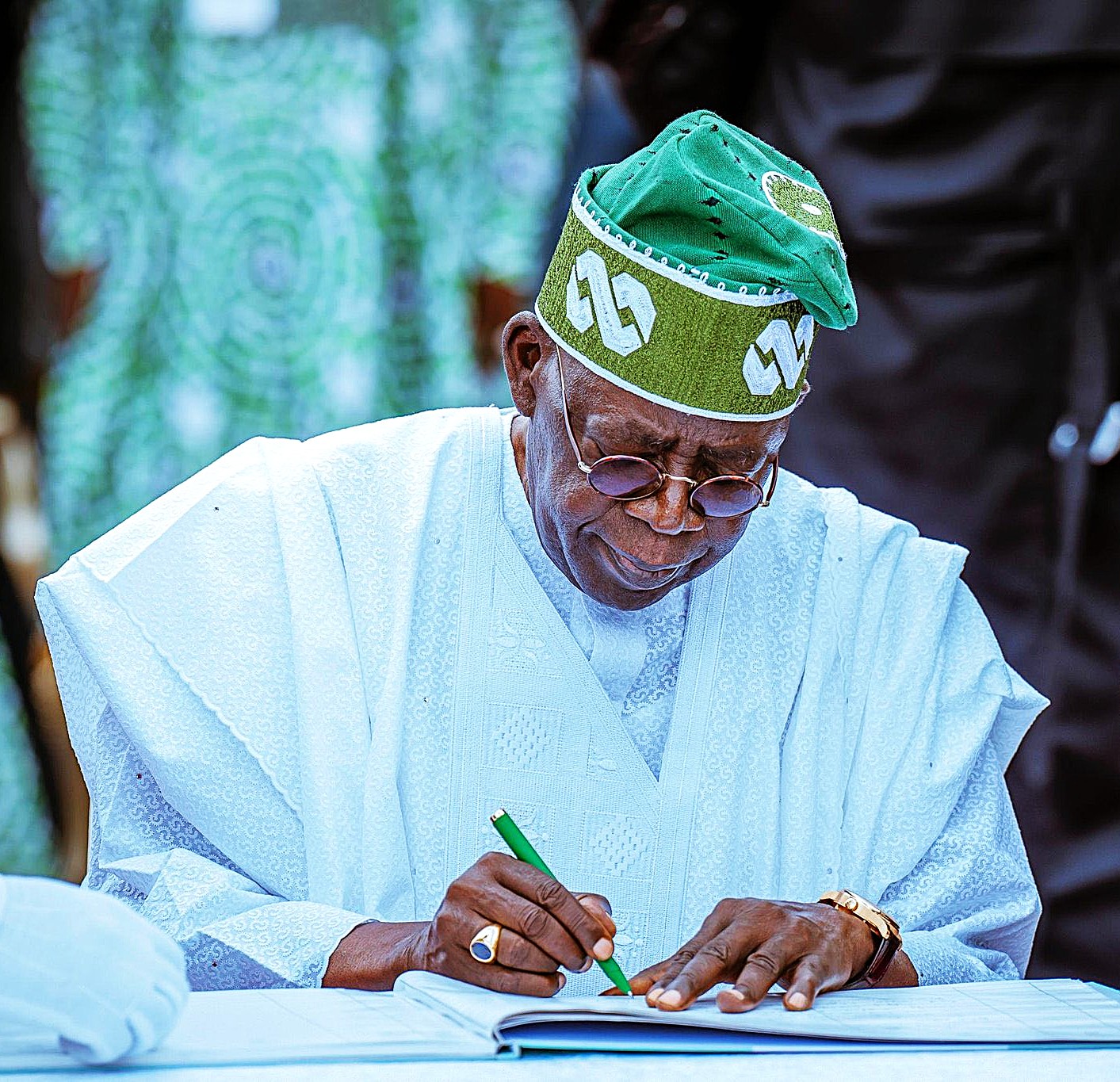
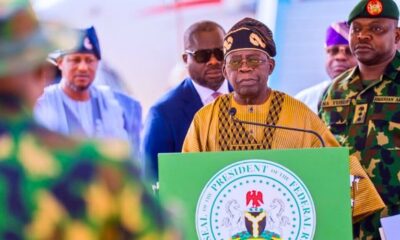
President Bola Ahmed Tinubu has formally signed into law four significant tax reform bills recently passed by the National Assembly, marking a crucial step in his administration’s drive to restructure Nigeria’s fiscal framework and boost economic growth.
The signing ceremony, held at the Presidential Villa on Thursday, was attended by top government officials, including Senate President Godswill Akpabio, Speaker of the House of Representatives Tajudeen Abbas, and key committee chairmen on finance from both chambers of the National Assembly.
Also present were Kwara State Governor Abdulrazaq AbdulRahman, Imo State Governor Hope Uzodimma, Minister of Finance Wale Edun, and Attorney General of the Federation Lateef Fagbemi, SAN.
The newly signed bills, the Nigeria Tax Bill, the Nigeria Tax Administration Bill, the Nigeria Revenue Service (Establishment) Bill, and the Joint Revenue Board (Establishment) Bill, were the product of months of consultations with stakeholders and interest groups nationwide.
President Tinubu described the laws as a clear reflection of his government’s commitment to creating a fair, modern, and efficient tax system capable of stimulating investment, eliminating multiple taxation, and enhancing transparency in revenue collection.
The Nigeria Tax Bill aims to consolidate Nigeria’s scattered tax laws into a single, simplified framework to reduce duplication and ease compliance for businesses and individuals. Meanwhile, the Nigeria Tax Administration Bill provides a unified operational structure for tax administration at all government levels, aiming to foster better coordination and efficiency.
The Nigeria Revenue Service (Establishment) Bill repeals the Federal Inland Revenue Service (FIRS) Act and establishes a new, performance-driven Nigeria Revenue Service (NRS) with broader responsibilities, including the collection of non-tax revenues. It also introduces stringent transparency and accountability mechanisms.
Additionally, the Joint Revenue Board (Establishment) Bill sets up a national body to harmonise tax efforts across the country and includes provisions for a Tax Appeal Tribunal and a Tax Ombudsman’s Office, offering better protection for taxpayer rights and ensuring faster dispute resolution.
According to the Presidency, these reforms are expected to enhance government revenue, reduce investor uncertainty, create jobs, and improve the overall ease of doing business in the country. The laws also promise to lessen the tax burden on low-income earners, working families, and small businesses while eliminating outdated inefficiencies in the system.
President Tinubu emphasised that the new tax framework marks a departure from previous policies, establishing a fair, transparent, and modern tax system. He said, “For too long, our tax system has been a patchwork — complex, inequitable, and burdensome. It has weighed down the vulnerable and shielded inefficiency. That era ends today.”
He added that the reforms would form the groundwork for a future-focused Nigeria, unlocking opportunities for citizens while ensuring sustainable economic growth.
“This is the first major pro-people tax reform in a generation,” Tinubu stated on his verified X handle. “We are laying the foundation for a tax regime that rewards enterprise, protects the vulnerable, and mobilises revenue without punishing productivity.”







Tinubu mandates Shettima to lead high-level delegation to UNGA
NUJ demands independent probe into deaths of 37 miners in NSCDC custody

Tunji-Ojo leads FG delegation to Niger over deaths of miners in NSCDC custody

IGP Disu visits Niger, vows thorough probe into deaths of 37 miners in NSCDC custody

INEC opens recruitment portal for 1.4 Million Ad Hoc Staff for 2027 elections

Police rescue eight kidnap victims in Benue forest, one dies from injuries

Soludo grants pardon to native doctor Akwa Okuko, gives him new role in Anambra

Appeal Court upholds NDC registration, says Lokoja Court abused judicial power

APC Campaign Council accuses Atiku of compromising Nigeria’s interests over Mambilla dispute

Tinubu orders full investigation into deaths of 37 miners in NSCDC custody
IGP Disu visits Niger, vows thorough probe into deaths of 37 miners in NSCDC custody
Tunji-Ojo leads FG delegation to Niger over deaths of miners in NSCDC custody
NUJ demands independent probe into deaths of 37 miners in NSCDC custody
Tinubu mandates Shettima to lead high-level delegation to UNGA
-
 News2 days ago
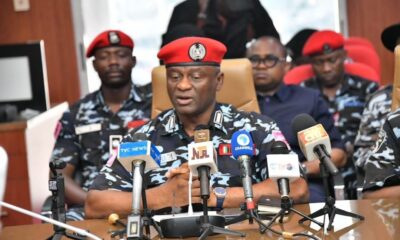
IGP Disu visits Niger, vows thorough probe into deaths of 37 miners in NSCDC custody
-
 News2 days ago
Tunji-Ojo leads FG delegation to Niger over deaths of miners in NSCDC custody
-
NUJ FCT2 days ago
NUJ demands independent probe into deaths of 37 miners in NSCDC custody
-
 National News12 hours ago
Tinubu mandates Shettima to lead high-level delegation to UNGA