
National News
Tinubu signs Export Prohibition Repeal, IDPs Protection Bills into law

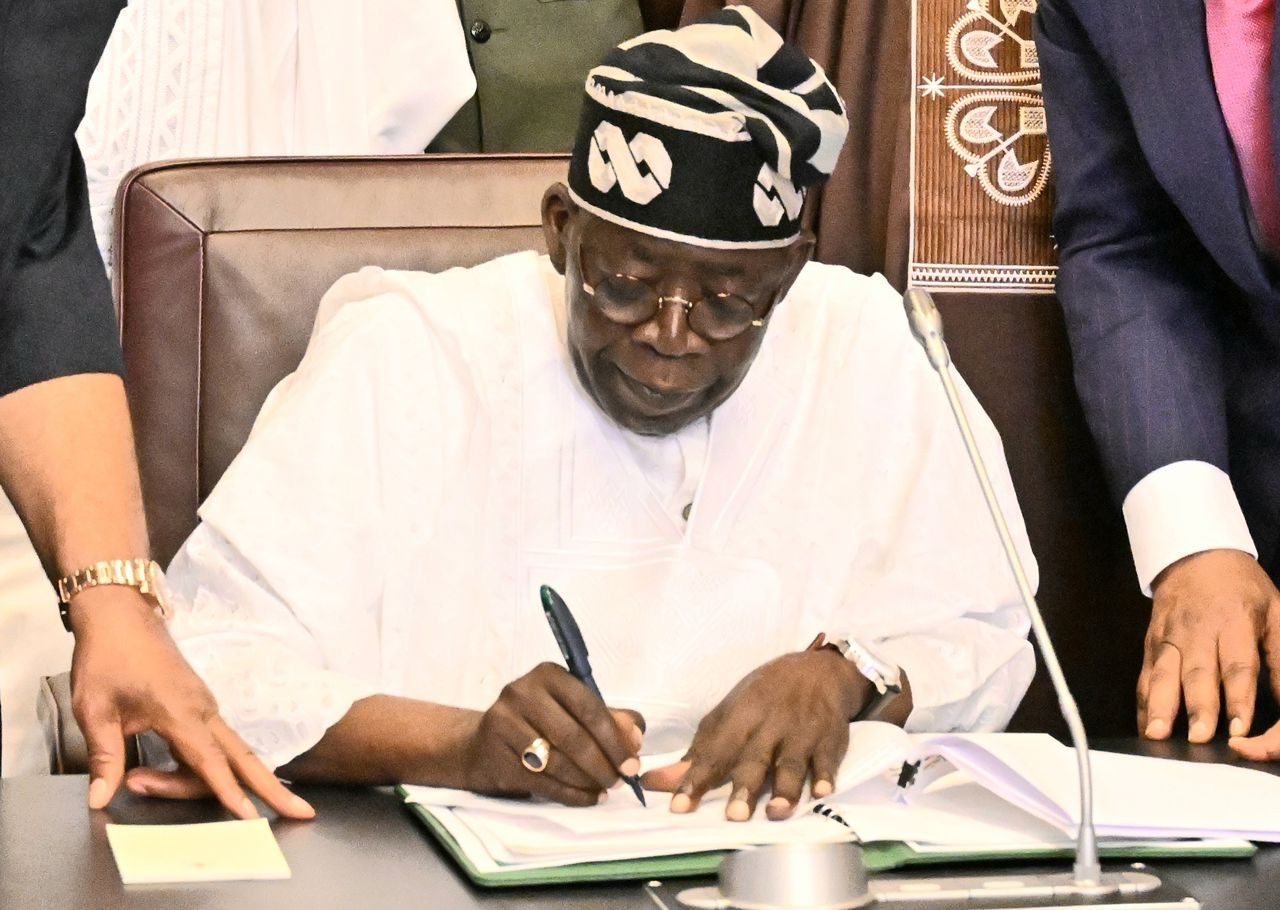
President Bola Ahmed Tinubu has given assent to two bills recently passed by the National Assembly, marking significant legislative steps in Nigeria’s trade policy and humanitarian framework.
The Senate President, Godswill Akpabio, announced the presidential assent during plenary on Wednesday.
“President Bola Tinubu has assented to two new bills. He assented to the Export Prohibition Repeal and Re-enactment Bill, 2025,” Akpabio said.
“He has also assented to the African Union Convention for the Prohibition and Assistance of Internally Displaced Persons’ Domestication and Enforcement Bill, 2020–2025.”
The Export Prohibition Repeal and Re-enactment Bill seeks to repeal the Export (Prohibition) Act of 1989, which restricts the export of key staple commodities such as maize, rice, yam tubers, beans, cassava tubers and timber.
The original legislation was enacted to prioritise domestic consumption and safeguard Nigeria’s food security. However, over the years, critics have argued that the law had become outdated, limiting Nigeria’s export capacity and discouraging foreign investment, particularly in the agricultural sector.
Proponents of the repeal contend that easing export restrictions would enable Nigeria to maximise its comparative advantage as a major producer of several agricultural commodities and boost foreign exchange earnings.
The presidential assent comes amid ongoing concerns over food security. In 2024, President Tinubu had ordered strict compliance with the Export (Prohibition) Act to curb smuggling and stabilise local food supply during a period of rising food prices.
The second bill assented to by the president domesticates the African Union Convention for the Protection and Assistance of Internally Displaced Persons, commonly referred to as the Kampala Convention.
Adopted by the African Union in 2009, the convention provides a comprehensive legal framework for preventing internal displacement, protecting the rights of internally displaced persons (IDPs), and ensuring durable solutions for their return, resettlement or reintegration.
Although Nigeria signed the convention in 2009, it had not been domesticated into national law until now.
The domestication bill was sponsored by the Deputy Speaker of the House of Representatives, Benjamin Kalu, and was passed by the House before receiving concurrence from the Senate.
















BREAKING: Security Forces Rescue 20 Prospective NYSC Members, Civilian Abducted in Imo

State Police Must Protect Nigerians, Not Intimidate Them — Comrade Grace Ike

BREAKING: NLC declares indefinite strike in FCT

Lagos hosts Chartered Risk Management Institute’s silver jubilee conference, spotlights youth challenge and national awards

BREAKING: NAF names 25 people killed in ATR 42 crash in Ondo (Full List)

KONEF celebrates World Teachers’ Day, urges greater investment in teaching

Gov. bago swears in six new commissioners, tasks them on diligence

Police Arrest man for raping, impregnating 12-Year-Old in FCT

2027: ‘A Vote for Obi, NDC Is a Vote to Kill APGA’ — Anambra Govt

2027: ‘I Have Faith in God That Tinubu Will Return’ — Umahi
Gov. bago swears in six new commissioners, tasks them on diligence
KONEF celebrates World Teachers’ Day, urges greater investment in teaching
BREAKING: NAF names 25 people killed in ATR 42 crash in Ondo (Full List)
Lagos hosts Chartered Risk Management Institute’s silver jubilee conference, spotlights youth challenge and national awards
BREAKING: NLC declares indefinite strike in FCT
State Police Must Protect Nigerians, Not Intimidate Them — Comrade Grace Ike
BREAKING: Security Forces Rescue 20 Prospective NYSC Members, Civilian Abducted in Imo
-
 News2 days ago
Gov. bago swears in six new commissioners, tasks them on diligence
-
 News1 day ago
KONEF celebrates World Teachers’ Day, urges greater investment in teaching
-
 News1 day ago
BREAKING: NAF names 25 people killed in ATR 42 crash in Ondo (Full List)
-
 News1 day ago
Lagos hosts Chartered Risk Management Institute’s silver jubilee conference, spotlights youth challenge and national awards
-
 News9 hours ago
BREAKING: NLC declares indefinite strike in FCT
-
 NUJ FCT5 hours ago
State Police Must Protect Nigerians, Not Intimidate Them — Comrade Grace Ike
-
 News3 hours ago
BREAKING: Security Forces Rescue 20 Prospective NYSC Members, Civilian Abducted in Imo