
Business
Nigeria’s inflation slows marginally to 15.91% in June as food prices continue to rise

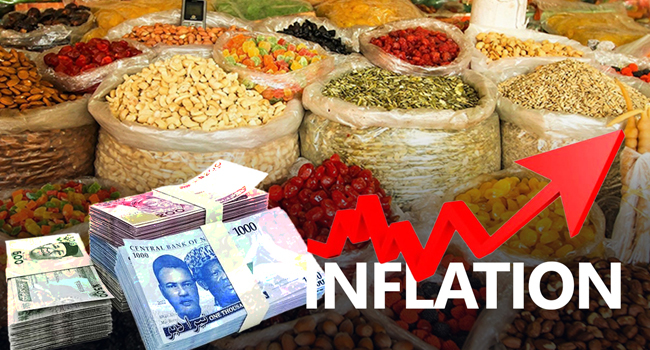
Nigeria’s headline inflation rate eased slightly to 15.91 per cent in June 2026, down from 15.93 per cent recorded in May, according to the latest Consumer Price Index (CPI) report released by the National Bureau of Statistics (NBS).
The report, published on Wednesday, showed that while overall inflation moderated marginally, food inflation continued to climb, rising to 17.52 per cent in June from 16.96 per cent in May.
According to the NBS, the slight decline in headline inflation was driven mainly by a drop in core inflation, which fell to 15.92 per cent in June from 16.82 per cent in the previous month.
The Bureau, however, noted that food prices continued to rise due to increases in the average cost of staple items, including crayfish, fresh pepper, tomatoes, dried green peas, yam flour, water yam, beef, bananas, cassava flour, cowpeas, garri, Irish potatoes and yam tubers.
“In June 2026, the headline inflation rate was 15.91 per cent, down from 15.93 per cent in May 2026, and stood at 25.29 per cent in the same month of the preceding year (June 2025),” the report stated.
It added that on a month-on-month basis, headline inflation stood at 1.66 per cent in June, compared with 1.75 per cent in May, indicating a slower pace of increase in the average price level.
On food inflation, the NBS reported that the year-on-year food inflation rate rose to 17.52 per cent, compared with 25.41 per cent recorded in June 2025.
Month-on-month food inflation increased to 3.75 per cent in June from 2.98 per cent in May, representing a 0.77 percentage-point increase.
State-by-state data showed that Kogi (53.02%), Niger (43.83%) and Benue (40.83%) recorded the highest year-on-year food inflation rates.
In contrast, Katsina (19.15%), Rivers (23.81%) and Imo (24.60%) posted the slowest annual increases in food prices.
On a month-on-month basis, Katsina (16.82%), Kebbi (9.79%) and Niger (8.96%) experienced the sharpest increases in food inflation, while Borno (-3.54%), Benue (-2.36%) and Bayelsa (-1.34%) recorded the lowest monthly food inflation rates.





AFP to storm Made By Design Expo 2026 with new designs

Peller announces plans to host Wole Soyinka on livestream

Indonesia seeks Nigerian investment in renewable energy, manufacturing, agriculture

UBEC warns states as $552m Education programme targets 29 Million children

IMF urges Nigeria to reject broad petrol subsidy, recommends targeted relief

Atiku accuses Tinubu of making life expensive, promises affordable living

Zenith Bank Champions Girl-child Empowerment, Equips 300 Schoolgirls For The Future

N101m Judgment Debt: SERAP appeal returned for reassignment as Lawyers withdraw applications

Senate Orders Probe, Aircraft Safety Audit After Fatal NAF Crash in Ondo

Police Detain Rochas Okorocha Over Alleged Forgery, Impersonation

‘We Survived on Garri and Dirty Water’ — Rescued NYSC Member Recounts Kidnap Ordeal

Atiku Demands Full Disclosure of Coastal Highway Payments, Questions Alleged $20bn Loan

Livinus Victor condemns Abike Dabiri-Erewa’s remarks On journalism, demands public apology to Nigerian Journalists

2027: APC Names PDP’s Wike, Accord’s Adeleke, APGA’s Soludo Campaign Coordinators
Indonesia seeks Nigerian investment in renewable energy, manufacturing, agriculture

CDS Calls for Increased Investment in Indigenous Space Technology to Boost National Security

Shettima Meets Yahaya Bello, Badaru, Other Political Leaders at Presidential Villa
IMF urges Nigeria to reject broad petrol subsidy, recommends targeted relief
UBEC warns states as $552m Education programme targets 29 Million children
Zenith Bank Champions Girl-child Empowerment, Equips 300 Schoolgirls For The Future
-
 News2 days ago
‘We Survived on Garri and Dirty Water’ — Rescued NYSC Member Recounts Kidnap Ordeal
-
 News2 days ago
Atiku Demands Full Disclosure of Coastal Highway Payments, Questions Alleged $20bn Loan
-
 News1 day ago
Livinus Victor condemns Abike Dabiri-Erewa’s remarks On journalism, demands public apology to Nigerian Journalists
-
 News1 day ago
2027: APC Names PDP’s Wike, Accord’s Adeleke, APGA’s Soludo Campaign Coordinators
-
 News2 days ago
Shettima Meets Yahaya Bello, Badaru, Other Political Leaders at Presidential Villa
-
 News5 hours ago
IMF urges Nigeria to reject broad petrol subsidy, recommends targeted relief
-
 News5 hours ago
UBEC warns states as $552m Education programme targets 29 Million children
-
 National News5 hours ago
Indonesia seeks Nigerian investment in renewable energy, manufacturing, agriculture