
News
Power sector reform failing, Nigerians ‘paying for darkness,’ says Ajaero

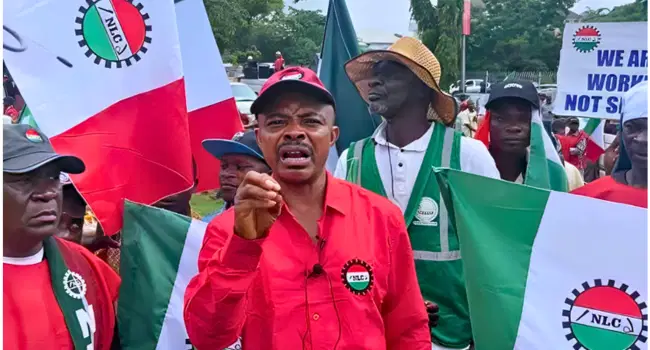
Joe Ajaero, president of the Nigeria Labour Congress (NLC), has described the privatisation of Nigeria’s electricity sector as a “grand deception” that has failed to deliver reliable power and has worsened energy poverty for workers, households, and businesses.
Speaking at the annual conference of women and youth of the National Union of Electricity Employees (NUEE) in Abuja, Ajaero said more than a decade after privatisation, electricity generation has remained largely stagnant at between 4,000 and 5,000 megawatts—the same level recorded before privatisation. He criticised the sector’s frequent grid collapses, poor supply, and rising tariffs.
“Instead of progress, we witness regression. Instead of light, we have darkness. The national grid collapses with the frequency of a faulty generator, sometimes plunging the entire nation into blackout,” he said.
Ajaero argued that public assets were transferred to investors who lacked the technical capacity and financial strength to manage them, relying heavily on loans from Nigerian banks without injecting fresh foreign capital. He said this weakened domestic credit and placed undue pressure on the naira.
“…They acquired the DISCOs and GENCOs on a shoestring budget and now expect Nigerian workers to pay for their loans through outrageous electricity tariffs,” he added.
He further condemned the electricity band classification system, describing it as unfair and burdensome. “Band A consumers pay through their noses but still receive epileptic power supply. This government is asking Nigerians to pay for darkness. We reject this segregation. Electricity is a right, not a commodity to be auctioned to the highest bidder while the poor are left in the dark,” Ajaero said.
The NLC president also questioned reports that the federal government plans to pay between N2 trillion and N3 trillion to power generation companies. He described the alleged plan as a “clandestine move to ‘settle the boys’ as the 2027 elections approach” and dismissed the electricity subsidy claim as a “phantom.”
While acknowledging the Electricity Act, which devolves certain powers to states, Ajaero said decentralisation alone would not resolve the sector’s challenges without a clear national framework. He called for a national stakeholders’ summit involving workers, manufacturers, and sector experts to develop a people-centred roadmap prioritising affordable and stable electricity, public investment in generation and transmission infrastructure, and service-reflective tariffs.
“The Nigerian people cannot continue to pay for darkness,” he added.











Livinus Victor condemns Abike Dabiri-Erewa’s remarks On journalism, demands public apology to Nigerian Journalists

CDS Calls for Increased Investment in Indigenous Space Technology to Boost National Security

Atiku Demands Full Disclosure of Coastal Highway Payments, Questions Alleged $20bn Loan

‘We Survived on Garri and Dirty Water’ — Rescued NYSC Member Recounts Kidnap Ordeal

Shettima Meets Yahaya Bello, Badaru, Other Political Leaders at Presidential Villa

Court strikes out FG’s eight-count charge against alleged fake agency DG, Adeyemi

2026/2027 Legal Year: CJN Swears In 68 New SANs

Former FRSC Corps Marshal, Dauda Biu Dies at 62

Latest World Bank report proves our reforms are working – Tinubu

Zenith Bank to Launch Maiden Girl-Child Empowerment Programme on October 12
Latest World Bank report proves our reforms are working – Tinubu
Former FRSC Corps Marshal, Dauda Biu Dies at 62
‘We Survived on Garri and Dirty Water’ — Rescued NYSC Member Recounts Kidnap Ordeal
Atiku Demands Full Disclosure of Coastal Highway Payments, Questions Alleged $20bn Loan
2026/2027 Legal Year: CJN Swears In 68 New SANs
Court strikes out FG’s eight-count charge against alleged fake agency DG, Adeyemi
Shettima Meets Yahaya Bello, Badaru, Other Political Leaders at Presidential Villa
CDS Calls for Increased Investment in Indigenous Space Technology to Boost National Security
Livinus Victor condemns Abike Dabiri-Erewa’s remarks On journalism, demands public apology to Nigerian Journalists
-
 National News2 days ago
Latest World Bank report proves our reforms are working – Tinubu
-
 News15 hours ago
‘We Survived on Garri and Dirty Water’ — Rescued NYSC Member Recounts Kidnap Ordeal
-
 News1 day ago
Former FRSC Corps Marshal, Dauda Biu Dies at 62
-
 News15 hours ago
Atiku Demands Full Disclosure of Coastal Highway Payments, Questions Alleged $20bn Loan
-
 News20 hours ago
2026/2027 Legal Year: CJN Swears In 68 New SANs
-
 News18 hours ago
Court strikes out FG’s eight-count charge against alleged fake agency DG, Adeyemi
-
 News15 hours ago
Shettima Meets Yahaya Bello, Badaru, Other Political Leaders at Presidential Villa
-
 News54 minutes ago
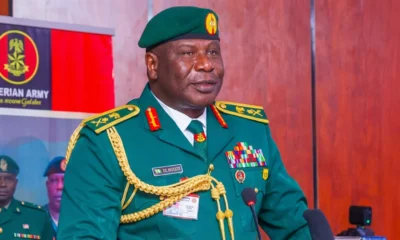
CDS Calls for Increased Investment in Indigenous Space Technology to Boost National Security