
FCT News
FCT residents lament rising transport fares after fuel price hike

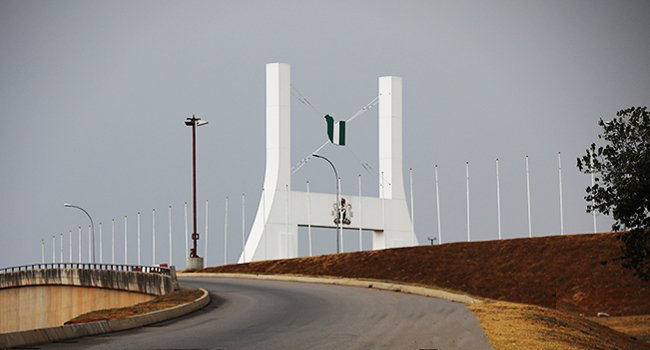
Residents of the Federal Capital Territory have raised concerns over rising transport fares following the recent increase in the pump price of petrol across the country.
The News Agency of Nigeria reports that petrol, which was previously sold between N835 and N875 per litre in the FCT, is now being sold between N1,200 and N1,350.
Following the price adjustment, transport fares across several routes in the territory have reportedly increased by about 100 per cent.
Some commuters who spoke with the News Agency of Nigeria on Friday said commercial vehicle operators had already raised fares, warning that the development could further worsen the cost of living.
Mrs Ngozi Okeke, a civil servant in Garki, said the fare from Nyanya to the city centre had increased within days of the fuel price change.
“Last week, I paid N800 to work, but today I paid N1,000. It may look small, but when you calculate it for the whole week, it is a lot,” she said.
Another commuter, Theresa Godspower, said she paid N700 from Nyanya to the Federal Secretariat, compared to the N500 she previously paid.
Mr Musa Abdullahi also said he paid N1,200 from Masaka to the city centre, up from the N700 he used to pay.
Similarly, Mr Godwin Ameh noted that the fare from Lugbe to Wuse had increased from N800 to N1,000, with some drivers charging as much as N1,200.
Mr Amos Badifu, a public servant, warned that increases in transport fares often lead to higher food prices in markets.
“Whenever fuel goes up, transporters increase fares and traders also raise the cost of food items because of transportation. The fare from Kuje to Berger has increased from N1,300 to N1,500, and even bike fares have also gone up,” he said.
He added that prices of food items could rise further as traders adjust to the increased cost of transportation.
A taxi driver, Mr John Eze, explained that operators had little option but to raise fares in order to remain in business.
“Yesterday, I bought fuel at N1,250 per litre, but today it is N1,350. We have to adjust fares or we will run at a loss,” he said.
The News Agency of Nigeria also observed that fewer vehicles were seen on some major roads in the city as motorists begin to feel the impact of the higher fuel prices.
An economist, Dr Ibrahim Sule, said increases in fuel prices usually have a ripple effect across the economy, particularly on transportation and food supply.
According to him, transportation costs form a significant part of the final price of goods in Nigeria, especially food transported from rural areas to urban markets.
“When fuel prices rise, transport costs increase, and traders usually pass the additional cost to consumers. This is why people fear food inflation may follow,” he said.
Sule advised the government to strengthen social protection measures and improve mass transit systems to cushion the impact on residents.
He also recommended investment in alternative transport systems to reduce the country’s heavy dependence on petrol-powered mobility.


















NUJ FCT Chairman Felicitates Muslims Nationwide on Maulid Celebration, calls for peace and unity
Eid-el-Maulud: Tinubu Urges Muslims to Embrace Prophet Muhammad’s Teachings

2027: APC Denies Withdrawal of Tinubu’s Campaign Council List

Tinubu Orders Immediate Rescue Operation for Niger Abduction Victims

Freedom at Last: How Becheve Women and Girls Broke Free from the ‘Money Woman’ Tradition

NNPP Guber Candidate, Adedapo Seeks Probe Into Oranyan Market Inferno

JAMB Introduces Online O’Level Verification, Upload for 2026 UTME Candidates

Ogogo: Remains of Veteran Actor Taiwo Hassan Arrive Ilaro for Burial

SGF silent as phantom agency boss fires back

LEADERSHIP News Editor Authors Book On Digital Shift In Nigeria’s Newspaper Industry
SGF silent as phantom agency boss fires back

Katsina Pays Mothers N1,000 for Every Infant Immunisation Visit
LEADERSHIP News Editor Authors Book On Digital Shift In Nigeria’s Newspaper Industry
Freedom at Last: How Becheve Women and Girls Broke Free from the ‘Money Woman’ Tradition
Tinubu Orders Immediate Rescue Operation for Niger Abduction Victims
Ogogo: Remains of Veteran Actor Taiwo Hassan Arrive Ilaro for Burial
JAMB Introduces Online O’Level Verification, Upload for 2026 UTME Candidates
NNPP Guber Candidate, Adedapo Seeks Probe Into Oranyan Market Inferno
2027: APC Denies Withdrawal of Tinubu’s Campaign Council List
Eid-el-Maulud: Tinubu Urges Muslims to Embrace Prophet Muhammad’s Teachings
-
 News1 day ago
SGF silent as phantom agency boss fires back
-
 News2 days ago
Katsina Pays Mothers N1,000 for Every Infant Immunisation Visit
-
 News2 days ago
LEADERSHIP News Editor Authors Book On Digital Shift In Nigeria’s Newspaper Industry
-
 News1 day ago
Freedom at Last: How Becheve Women and Girls Broke Free from the ‘Money Woman’ Tradition
-
 News5 hours ago
Tinubu Orders Immediate Rescue Operation for Niger Abduction Victims
-
 Entertainment1 day ago
Ogogo: Remains of Veteran Actor Taiwo Hassan Arrive Ilaro for Burial
-
 News1 day ago
JAMB Introduces Online O’Level Verification, Upload for 2026 UTME Candidates
-
 News1 day ago
NNPP Guber Candidate, Adedapo Seeks Probe Into Oranyan Market Inferno