
News
Nigeria, UK sign deal on deportation of criminals, failed asylum seekers

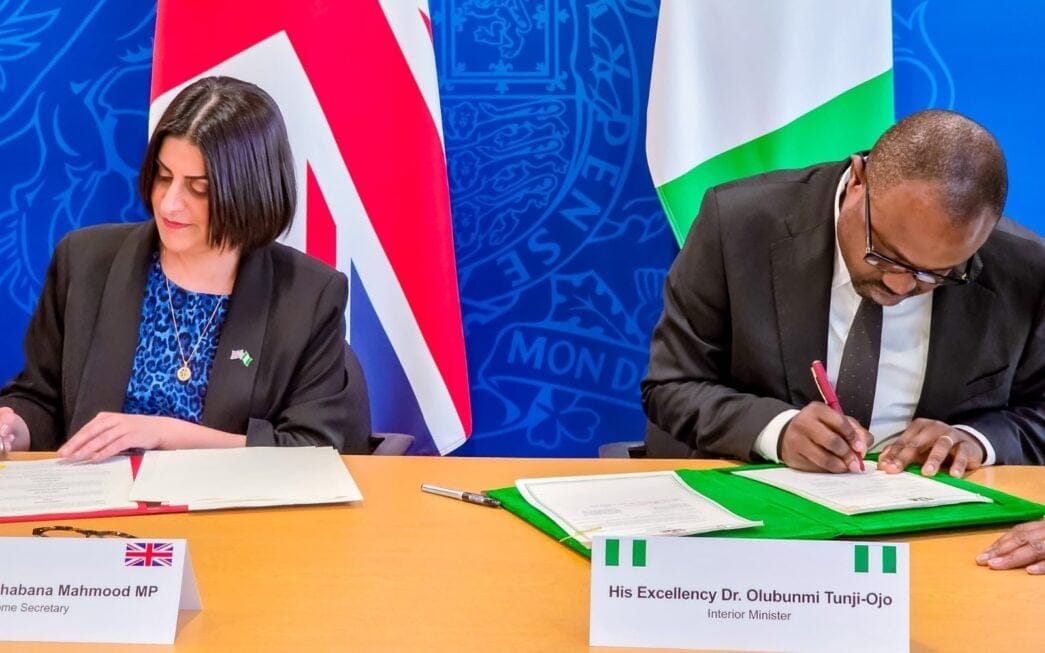
Nigeria has signed a new agreement with the United Kingdom allowing Britain to deport failed asylum seekers and convicted criminals to the West African country.
The deal was signed by Minister of Interior, Olubunmi Tunji-Ojo, and UK Home Secretary, Shabana Mahmood, during President Bola Tinubu’s state visit to the UK, according to the British Home Office.
Under the agreement, the UK will also be able to return visa overstayers to Nigeria, with expanded flexibility in the deportation process.
A key provision of the deal allows Nigeria, for the first time, to accept UK-issued letters as valid identification for individuals without passports, easing documentation challenges that previously delayed deportations.
The Home Office said the move removes a major administrative barrier to returning individuals to their home countries. However, details regarding the start date, duration, and any financial arrangements tied to the agreement were not disclosed.
The development follows a similar 2022 arrangement between the UK and Rwanda, which was later abandoned after Prime Minister Keir Starmer described it as “dead.”
It remains unclear whether the deportation agreement will apply strictly to Nigerian nationals or include individuals of other nationalities.
Official data indicates that 961 Nigerian failed asylum seekers have exhausted their appeal rights in the UK, while an additional 1,110 Nigerian nationals classified as foreign offenders are awaiting deportation.
Tunji-Ojo said Nigeria’s participation reflects its commitment to international obligations and responsible migration management.
“We are totally committed to being a responsible country in fulfilling our core obligations,” he said.
UK Minister for Border Security and Asylum, Alex Norris, described Nigeria as a key partner in addressing illegal migration, noting its status as the UK’s largest African visa market.
The agreement also includes provisions for joint operations and intelligence sharing to tackle criminal networks exploiting visa systems through fake sponsorships, sham marriages, and forged documents.
In addition, both countries plan to strengthen cooperation against online fraud, including romance scams, investment fraud, and cryptocurrency-related crimes, through a new intelligence-sharing framework known as a “fusion cell.”




















Tunji-Ojo leads FG delegation to Niger over deaths of miners in NSCDC custody

IGP Disu visits Niger, vows thorough probe into deaths of 37 miners in NSCDC custody

INEC opens recruitment portal for 1.4 Million Ad Hoc Staff for 2027 elections

Police rescue eight kidnap victims in Benue forest, one dies from injuries

Soludo grants pardon to native doctor Akwa Okuko, gives him new role in Anambra

Appeal Court upholds NDC registration, says Lokoja Court abused judicial power

APC Campaign Council accuses Atiku of compromising Nigeria’s interests over Mambilla dispute

Tinubu orders full investigation into deaths of 37 miners in NSCDC custody

Gov Bago orders immediate curfew in Minna as tension mounts over miners’ deaths

Macron hosts Tinubu to private dinner in Paris (Photos)

DSS Re-Arraigns Five Alleged Ansaru Leaders Over Oyo School Kidnap, Two Deaths

Court Jails South African Woman 25 Years for Importing 5.75kg Heroin

Lagos APC Unveils 2027 Campaign Council, Names Sanwo-Olu, Fashola, Ambode Leaders

Oyedele Begins Work on 2027 Finance Bill, Inaugurates Fiscal Policy Subcommittee

FAAC Disburses N2.338tn August Revenue, FG Gets N804.9bn

‘He Got Away With It in 2023’ — Keyamo Says Nigerians Will Scrutinise Obi’s Claims This Time

33 Suspected illegal miners die in NSCDC custody in Niger, Police launch probe
IGP Disu visits Niger, vows thorough probe into deaths of 37 miners in NSCDC custody

Obi-Kwankwaso Movement names 59-Member Campaign Council ahead of 2027 election (Full List)
APC Campaign Council accuses Atiku of compromising Nigeria’s interests over Mambilla dispute
-
 News2 days ago
Court Jails South African Woman 25 Years for Importing 5.75kg Heroin
-
 News2 days ago
DSS Re-Arraigns Five Alleged Ansaru Leaders Over Oyo School Kidnap, Two Deaths
-
 News2 days ago
Lagos APC Unveils 2027 Campaign Council, Names Sanwo-Olu, Fashola, Ambode Leaders
-
 National News2 days ago
Oyedele Begins Work on 2027 Finance Bill, Inaugurates Fiscal Policy Subcommittee
-
 News2 days ago
‘He Got Away With It in 2023’ — Keyamo Says Nigerians Will Scrutinise Obi’s Claims This Time
-
 National News2 days ago
FAAC Disburses N2.338tn August Revenue, FG Gets N804.9bn
-
 News1 day ago
33 Suspected illegal miners die in NSCDC custody in Niger, Police launch probe
-
 News32 minutes ago
IGP Disu visits Niger, vows thorough probe into deaths of 37 miners in NSCDC custody