
News
Lassa Fever death toll rises to 221 as NCDC records fresh surge in infections

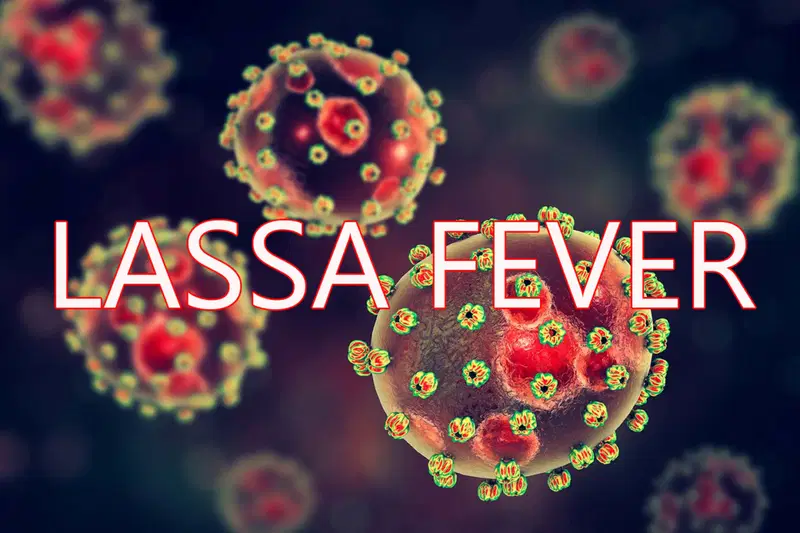
The Nigeria Centre for Disease Control and Prevention (NCDC) has raised fresh concern over the continued spread of Lassa fever, revealing that the disease has claimed 221 lives this year, with new infections increasing steadily over a three-week period.
The agency’s latest epidemiological reports for Weeks 24, 25 and 26 showed that confirmed cases rose from 13 in Week 24 to 22 in Week 25 before climbing further to 31 in Week 26, indicating renewed transmission across affected states.
According to the reports, Nigeria recorded a cumulative total of 922 confirmed cases and 221 deaths by the end of Week 26 (June 22–28, 2026), representing a case fatality rate (CFR) of 24 per cent, significantly higher than the 18.7 per cent recorded during the corresponding period in 2025.
The NCDC disclosed that the latest 31 confirmed cases were reported in Ondo, Taraba, Benue and Bauchi states, with Ondo and Bauchi remaining among the country’s major hotspots.
Earlier reports showed that Week 25 recorded 22 new confirmed cases across Ondo, Taraba, Benue and Bauchi states, while Week 24 recorded 13 infections from Ondo, Edo, Taraba, Benue and Bauchi.
Despite intensified surveillance and response efforts, the disease has now spread across 23 states and 111 local government areas, highlighting its continued threat to public health.
The agency further revealed that 85 per cent of all confirmed cases recorded this year originated from five states—Bauchi, Ondo, Taraba, Benue and Edo—underscoring the concentration of infections in known endemic areas.
According to the reports, young adults between the ages of 21 and 30 remain the most affected group, a trend that has remained consistent throughout the current outbreak.
The NCDC also noted that healthcare workers continue to face occupational risks. One health worker contracted the disease in Week 24, none was infected in Week 25, while another infection among healthcare personnel was recorded in Week 26.
The cumulative figures showed a gradual rise in infections over the three-week period. By Week 24, Nigeria had recorded 868 confirmed cases and 216 deaths, with a case fatality rate of 24.9 per cent, compared to 18.9 per cent during the same period in 2025.
By Week 25, confirmed cases had increased to 891, while deaths rose to 219. Although the fatality rate dropped slightly to 24.6 per cent, it remained considerably higher than the 18.6 per cent recorded during the corresponding period last year.
Health experts have repeatedly warned that the persistently high fatality rate reflects delays in case detection, late presentation of patients for treatment and continued exposure to infected rodents, the primary carriers of the Lassa virus.
The NCDC urged Nigerians to maintain good environmental hygiene, properly store food to prevent contamination by rodents, avoid contact with rat urine and droppings, and seek immediate medical attention if symptoms such as fever, weakness, headache or unexplained bleeding develop.
The agency also advised healthcare workers to strictly adhere to infection prevention and control measures while managing suspected cases to minimise the risk of hospital-based transmission.
Lassa fever is an acute viral haemorrhagic disease endemic to Nigeria and several other West African countries. It is primarily transmitted through contact with food or household items contaminated by the urine or faeces of infected multimammate rats, although person-to-person transmission can also occur, particularly in healthcare settings.








BREAKING: Veteran Nollywood Actor Francis Duru Dies at 57

Ebola: FG Orders Nationwide Awareness Campaign After Reported Case in Abuja

Sultan of Sokoto Meets Tinubu, Prays for Peaceful Elections

NEC Endorses 90-Day Plan to Ease Cost of Living, Targets Single-Digit Inflation

JUST-IN: Tinubu Appoints Ex-DSS DG Bichi to Lead NISS Governing Board

NUJ demands justice, fair hearing and protection of press freedom in Farida Isiak’s case

Gov Sule commends DSS over arrests, ammunition recoveries in Nasarawa

FCT Teachers Resume Classes After Suspending Two-Week Strike

Plateau Indigenous Youths Reject Petition Against DSS, Accuse Fulani Groups of Orchestrating ‘Calumny’ to Halt Security Operations

Seven-Year-Old Boy Found Dead After Kidnap, N2.5m Ransom Demand in Jos
Gov Sule commends DSS over arrests, ammunition recoveries in Nasarawa
FCT Teachers Resume Classes After Suspending Two-Week Strike
NUJ demands justice, fair hearing and protection of press freedom in Farida Isiak’s case
NEC Endorses 90-Day Plan to Ease Cost of Living, Targets Single-Digit Inflation

Jonathan Urges Nigeria to Boost Local Manufacturing, Reduce Imports
Seven-Year-Old Boy Found Dead After Kidnap, N2.5m Ransom Demand in Jos
JUST-IN: Tinubu Appoints Ex-DSS DG Bichi to Lead NISS Governing Board
Plateau Indigenous Youths Reject Petition Against DSS, Accuse Fulani Groups of Orchestrating ‘Calumny’ to Halt Security Operations
Ebola: FG Orders Nationwide Awareness Campaign After Reported Case in Abuja
Sultan of Sokoto Meets Tinubu, Prays for Peaceful Elections
-
 News1 day ago
Gov Sule commends DSS over arrests, ammunition recoveries in Nasarawa
-
 News2 days ago
Jonathan Urges Nigeria to Boost Local Manufacturing, Reduce Imports
-
 News2 days ago
Seven-Year-Old Boy Found Dead After Kidnap, N2.5m Ransom Demand in Jos
-
 FCT News1 day ago
FCT Teachers Resume Classes After Suspending Two-Week Strike
-
 NUJ FCT24 hours ago
NUJ demands justice, fair hearing and protection of press freedom in Farida Isiak’s case
-
 National News15 hours ago
NEC Endorses 90-Day Plan to Ease Cost of Living, Targets Single-Digit Inflation
-
 National News15 hours ago
JUST-IN: Tinubu Appoints Ex-DSS DG Bichi to Lead NISS Governing Board
-
 NUJ FCT2 days ago
Plateau Indigenous Youths Reject Petition Against DSS, Accuse Fulani Groups of Orchestrating ‘Calumny’ to Halt Security Operations